Salon no-show cost calculator (simple formula)
Free formulas and worked examples to estimate what empty chairs cost — then fix it with policy and reminders. Spreadsheet steps included.
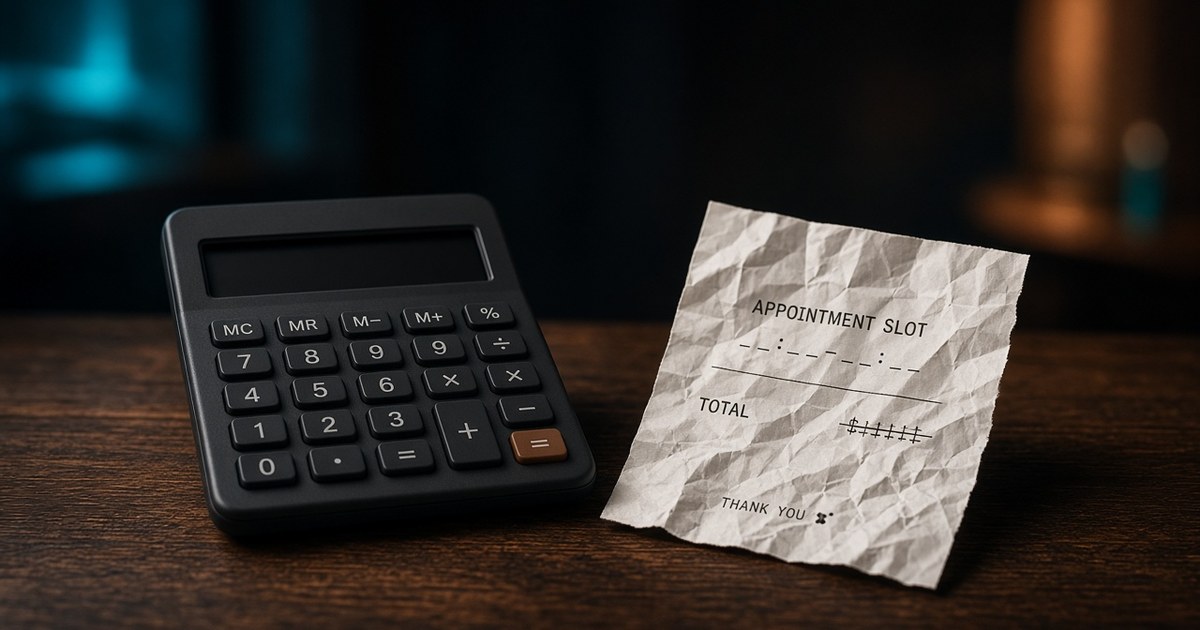
Key takeaways
- •No-show rate = no-shows ÷ booked appointments × 100 — use your book, not an invented industry average.
- •Weekly empty-chair revenue at risk ≈ missed slots × average ticket, before you count refills or deposits.
- •Refills and deposits cut the loss — they do not erase the missed hour unless the chair was truly refilled.
- •Track a few columns each week: booked, no-shows, unrefilled late cancels, ticket, refilled, deposits kept.
- •Turn the number into action with a clear policy and reminder texts — not another piece of software.
An empty chair is a booked hour you already paid for — rent, product, payroll for the stylist standing there. The client who never walked in did not feel the cost. You did.
You do not need booking software to see the number. You need three plain formulas, a week of honest counts from your book, and a habit of softening the loss when a waitlist actually fills the slot. Below is a free, copyable salon no-show cost calculator: rate, weekly/yearly revenue at risk, then after refill and deposits. Every worked number is an illustrative example, not a claim about your city or a typical salon.
When the number is clear, fix the habit with a written no-show policy and appointment reminder texts — not another dashboard.
What counts as a no-show (for this math)
For cost math, treat these the same when the chair stays empty:
- Client never arrives and never cancels
- Late cancel after you could no longer refill the slot
If you refilled from a waitlist or a walk-in, that hour is not empty-chair loss — count it in a “refilled” column so you do not overstate the damage. Early cancels with notice that you filled are operational noise, not the same as a dead chair.
Public calculator pages for salons use the same basic arithmetic (appointments × rate × ticket, with a refill caveat). Use them as methodology peers, not as proof of an “industry average” no-show rate. Enter your counts.
Formula 1 — no-show rate
no-show rate (%) = no-shows ÷ booked appointments × 100
Pick one period (a normal open week is fine). Count booked appointments in that period. Count no-shows (and unrefilled late cancels if you track them together for loss). Divide. That percentage is yours — not a number borrowed from a blog.
Formula 2 — weekly / yearly revenue at risk (before refill)
weekly revenue at risk ≈ missed slots × average ticket
Missed slots = no-shows + late cancels you could not refill (before subtracting successful refills). Average ticket = what you usually collect for that chair’s booked services (or use a service-specific average if colour and cuts differ a lot).
Annualize carefully:
yearly estimate ≈ weekly figure × weeks you actually open
If you close two weeks a year, do not multiply by 52 out of habit. Use the weeks the salon is open.
This is revenue at risk before refill and deposits — the worst-case empty-chair picture. Soften it in Formula 3.
Formula 3 — after refill + deposits
loss ≈ (missed − refilled) × average ticket − deposits kept on those visits
- Refilled slots cut the missed count first.
- Deposits kept offset some of what remains — they are not the full ticket.
- Prevention (fewer no-shows next month) is separate from deposit recovery. Do not treat “we kept $20” and “we prevented three no-shows” as if both restored full tickets in the same cell.
Deposit math caution: keeping a deposit recovers part of the ticket. Product time, chair time and the rest of the service price are still gone unless you refilled.
Worked examples (illustrative — not recommendations)
These numbers are examples for the arithmetic, not advice for your market and not claimed industry averages.
Example A — solo chair, one week (illustrative)
| Input | Illustrative value |
|---|---|
| Bookings that week | 40 |
| No-shows | 3 |
| Average ticket | $65 |
| Refilled from waitlist | 1 of the 3 |
- Rate = 3 ÷ 40 × 100 = 7.5%
- Weekly empty-chair revenue at risk (before refill) = 3 × $65 = $195
- After one refill → loss closer to 2 × $65 = $130 that week (before any deposit)
If this week is typical and you open 50 weeks a year: 130 × 50 = $6,500 illustrative yearly loss after that refill habit — still only as good as your real counts.
Example B — deposit on a missed colour (illustrative)
| Input | Illustrative value |
|---|---|
| Missed colour ticket | $80 |
| Deposit kept | $20 |
| Refilled? | No |
Cash kept = $20. That is not the full $80. Remaining gap on that visit ≈ $60 of ticket, plus the chair hour you already staffed, unless you fill it. If you later refill a different client into that hour, move the visit into the refilled column and stop counting full empty-chair loss for that slot.
Example C — small team snapshot (illustrative)
Three chairs, same week math per chair or as a combined book:
| Chair / book | Booked | No-shows | Avg ticket | Refilled | Deposits kept | Net estimated loss |
|---|---|---|---|---|---|---|
| Combined week | 90 | 6 | $70 | 2 | $40 | (6−2)×70 − 40 = $240 |
Same formulas — larger book, same honesty about refill and deposits.
Copy this into a spreadsheet (10 minutes)
Open Sheets or Excel. One row per week (or per chair per week if you prefer). Suggested columns:
| Column | What to enter |
|---|---|
| Week starting | Date |
| Booked | Count from the book |
| No-shows | Never arrived |
| Late cancels unrefilled | Cancelled too late to fill |
| Avg ticket | Your real average for that book |
| Refilled count | Waitlist / walk-in fills |
| Deposits kept | Cash or card deposits you retained on missed visits |
| Net estimated loss | (no-shows + late unrefilled − refilled) × avg ticket − deposits kept |
Optional helper columns: no-show rate (no-shows / booked), and a yearly running sum of net loss.
You do not need a hosted calculator widget on your site. A shared sheet your front desk updates on Friday is enough. Peer tools online walk through the same chairs × appointments × rate × ticket idea with a refill caveat — useful to cross-check your formulas, not to replace your counts.
Turn the number into action (not another tool)
A spreadsheet that says “$130 last week” only helps if next month’s number shrinks.
- Write the rule — notice window, fees, deposits — in plain language clients see at booking. Start from Salon no-show policy template.
- Remind before the day dies — confirmation at booking + one advance reminder; day-of for long services. Steal lines from Salon appointment reminder texts: 20 templates.
- Keep a waitlist you actually text when a slot opens — that is the “refilled” column earning its keep.
- Review prices and duration so a chronic empty hour is not also an underpriced hour — see How to price salon services.
If you want help shaping policy or reminder wording in your voice, GBot can draft it for you to approve. It does not calculate no-show cost, take deposits, sync your book, or auto-send SMS.
Related reading
- Salon no-show policy template — the rule clients see before the empty chair
- Salon appointment reminder texts: 20 templates — confirmation, 48h/24h, day-of, grace
- How to price salon services — so ticket averages in the spreadsheet match real costs
Sources
Methodology peers (same arithmetic family; not endorsements, not industry-rate claims):
- Booked.co: No-show calculator — chairs × appointments × rate × ticket; refill caveat
- Aasure: No-show cost calculator — rate as no-shows ÷ booked × 100
- Salon Accounts: No-show cost calculator — week/month/year multiplication; deposit as a starting offset
Count your book. Soften for refills. Keep only the deposit you actually retained. Then spend the hour you saved fixing policy and reminders — not hunting for a magic average percentage.
Frequently asked questions
How do I calculate salon no-show cost?
Count missed slots you could not refill, multiply by your average ticket, then subtract deposits you kept on those visits. Do the same for a typical open week, then multiply by the weeks you actually open. Soften the number when a waitlist fills the chair.
How do I calculate my no-show rate?
Divide no-shows by booked appointments for the same period, then multiply by 100. Example: 3 no-shows out of 40 bookings is 7.5%. Use your own book — do not paste someone else’s “industry average.”
Do late cancellations count as no-shows?
For cost math, count late cancels the same way when you could not refill the slot. If you refilled from a waitlist, that hour is not empty-chair loss. Keep a separate column so your policy language and your spreadsheet stay honest.
How does a deposit change the cost of a no-show?
A kept deposit recovers part of the ticket, not the whole service. If the ticket was $80 and you kept $20, you still lost product time and chair time unless you refilled. Do not double-count prevention and deposit recovery as if both were full tickets.
What if I fill the slot from a waitlist?
Subtract refilled slots from the missed count before you multiply by ticket. An empty chair that becomes a paid visit is not the same as a dead hour — your spreadsheet should show the difference.
Does GBot calculate no-show costs or take deposits automatically?
No. This calculator is owner math — spreadsheet or notes. Mia in GBot can draft policy and reminder wording for you to approve. GBot does not sync your book, take deposits, or auto-send SMS.
Related posts
Clear price list page: so the bill matches
One clear price list for your site, booking and wall menu — what’s included, honest “from” prices, and a same-day sync checklist.
Words customers actually use (inbox → replies)
Mine your DMs and booking questions for the words customers type — then rewrite jargon into plain replies, price lists and saved templates.

Salon appointment reminder texts: 20 templates
20 copy-paste salon appointment reminder and confirmation texts — timing, day-of notes, grace/late lines — edit the brackets and send in your voice.